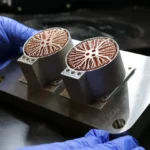

U.S. Marines with 3rd Marine Logistics Group used a 3D printer to manufacture a replacement component for a U.S. Coast Guard vessel during the Combined Joint Logistics Over-the-Shore 26 exercise in Pohang, South Korea, on July 11, cutting what would have been a two- to three-week shipping delay down to a few hours.
The part cost $12 to print — the same price as the original — but Chief Warrant Officer 2 Jonathan B. Salas, utilities officer for Regional Maintenance Operations Company North, 3rd Maintenance Battalion, said a cheaper filament option could shave another $4 off that without sacrificing performance. Marines with 3rd Maintenance Battalion, Combat Logistics Regiment 35, 3rd MLG, reverse-engineered the original piece using their design systems inside an Expeditionary Fabrication Facility, known as an X-FAB. After minor adjustments to the prototype, the printed part was installed and the vessel returned to operations.
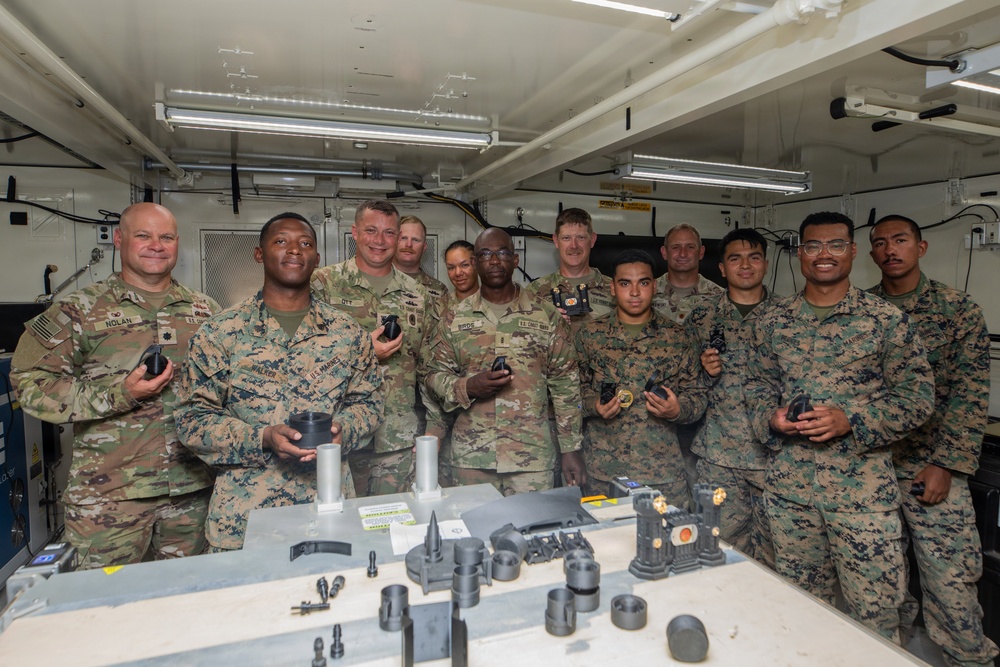
The stakes were real. “The immediate effect that the 3D-printed part provided to the mission was expediting the continued use of the Coast Guard’s rigid-hull inflatable boats, valued at around $600,000 each,” Salas said. Those boats were being used for quick-reaction-force and patrol missions to secure the surrounding waters during CJLOTS.
Cpl. Kenzie Gallang, a metal worker with the battalion, said the Coast Guard personnel didn’t see it coming. “The first prototype was a success; they were taken aback by the fact that a part such as their strainer can be reverse-engineered and 3D-printed in full in less than half a day,” Gallang said.
Col. Robert Fairley, commanding officer of Combat Logistics Regiment 35, framed it as a proof of concept with broader implications. “We are demonstrating how nontraditional manufacturing methods, even in an expeditionary environment, can produce parts of consequence to improve the readiness across the joint force,” Fairley said.
CJLOTS 26 is designed to train U.S. and Republic of Korea forces in transferring personnel and equipment from sea to shore in austere environments. The exercise runs alongside a broader alliance objective of improving U.S.-ROK interoperability, and the Marines also held a 3D printing capabilities showcase for members of the Coast Guard’s Port Security Unit 309 on July 17, 2026.
Source: dvidshub.net