
Researchers at Carnegie Mellon University have built software that takes a single photo, splits the object into separate 3D parts, and adds peg-and-socket joints so the pieces can be printed and snapped together by hand.
Part-aware 3D generators already break a model into pieces that look finished, but neighboring volumes often overlap or have nothing holding them, so the assembly falls apart under gravity. The CMU pipeline, SNAP3D, starts from those meshes, trims the overlaps, plants connectors at contact surfaces, and tunes each joint in a physics simulation until the object stands.
The team reconstructs a mesh with Hunyuan3D and cuts it into semantic parts with X-Part. Overlapping volume is assigned to one neighbor and trimmed from the other. A contact graph then marks which pieces actually touch, and a peg goes on the smaller part with a matching socket in the larger one. Connector position, tilt, radius, and insertion length are searched with a physics-in-the-loop optimizer so the joint can take gravity without sliding or rotating apart.
On 100 objects from the HY3D-Bench set, with two to 18 parts each, earlier generators (X-Part, OmniPart, PartCrafter) scored near 0 percent stability in that drop test. SNAP3D held 95 percent of the assemblies, with overlapping pairs down to 0.5 percent. Failures left in the set were mostly thin contact surfaces that could not host a connector large enough to hold.
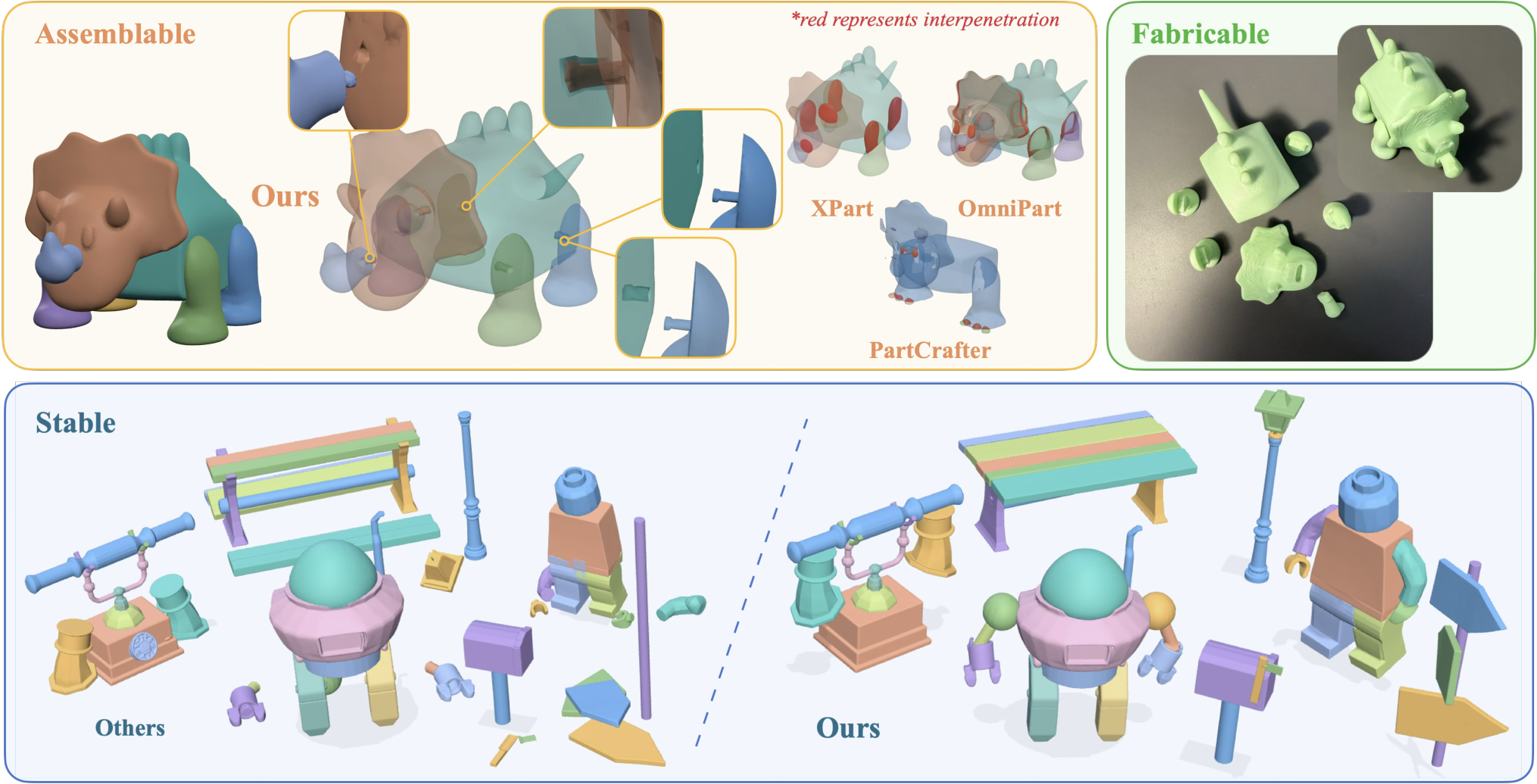
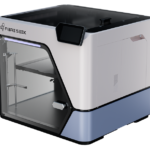
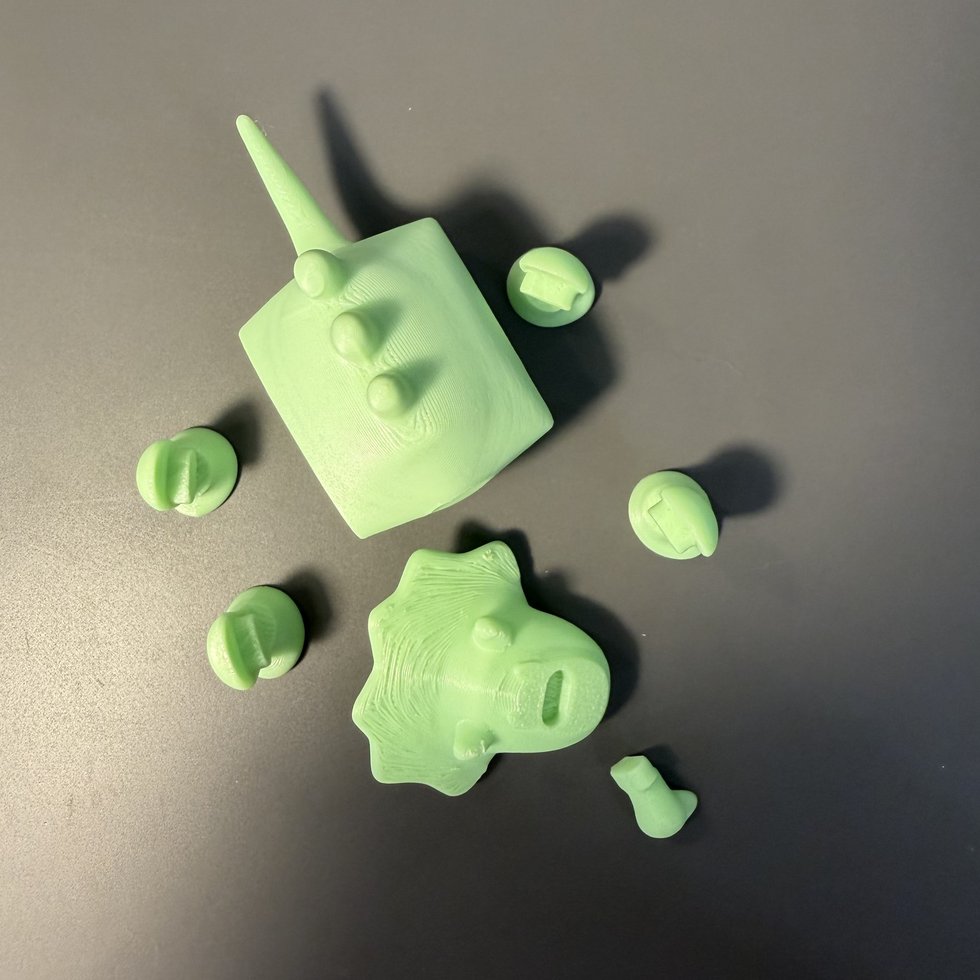
The researchers printed the exported parts on a Bambu Lab A1 mini in PLA and joined them by hand. The paper shows a ham hock, park bench, triceratops, gorilla, spacesuit toy, and cannon, among others.
Yu-Rou Tuan, Hao-Tang Tsui, Nicolás Ugrinovic, Kris Kitani, and Xiaoxuan Ma wrote the paper, posted to arXiv on 11 September 2026. Code is on GitHub.
Source: arxiv.org