
Oak Ridge National Laboratory and Boeing have 3D-printed a nearly two-ton steel mold that Boeing will use to stamp thermoplastic composite aircraft parts for a NASA program aimed at building composite airframes faster.
Those parts, including aircraft doors, are formed by pressing hot plastic between a pair of metal molds. Shops usually machine, cast, forge, and drill the tools, including long straight holes that carry heating and cooling fluid. ORNL printed this mold instead, so the fluid lines could curve with the shape of the tool.
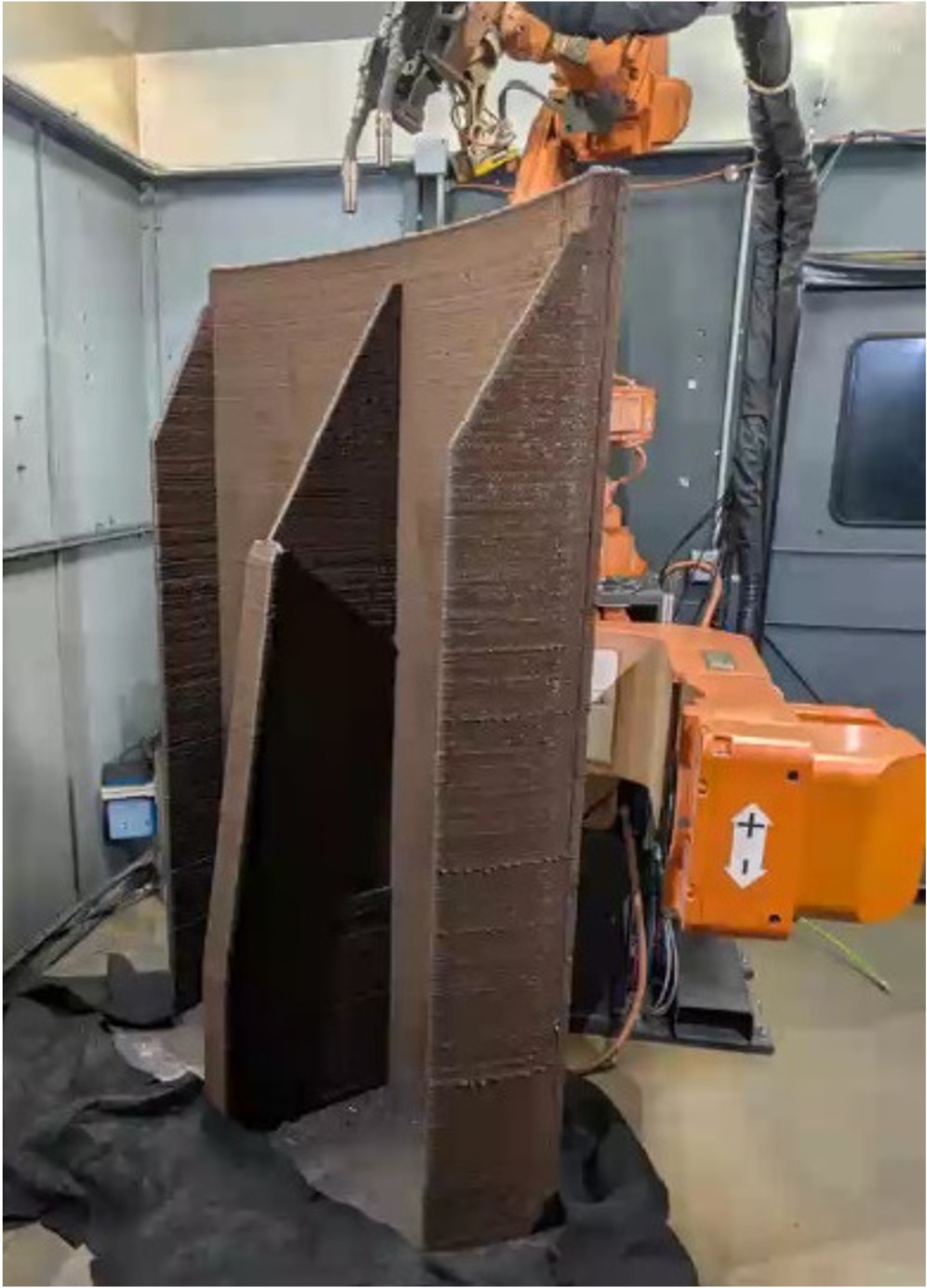
The mold is 6 feet tall and 4 feet wide. Printing it took eight weeks on Arc-1, the wire-arc system at ORNL’s Manufacturing Demonstration Facility. A robotic arm and a welding torch melt metal wire and stack it in layers. Arc-1 can feed more than one wire at once, which let the team put mild steel in the structure, where they wanted stiffness, and stainless steel on the working face, for corrosion resistance and a stable surface.
The hard part was keeping the print straight. As the steel cooled, residual stress twisted it out of shape. The team added temporary ribs to the back of the mold and ran 32 simulations to compensate for that warp. The finished print landed within a few millimeters of the intended shape. Baker Industries in Michigan, a Lincoln Electric subsidiary, then annealed the mold to relieve the stress, cut the ribs away, and completed the remaining fabrication to Boeing’s requirements. Not every piece of the finished tool was printed. The wire-arc process itself comes from a cooperative research agreement between ORNL and Lincoln Electric.
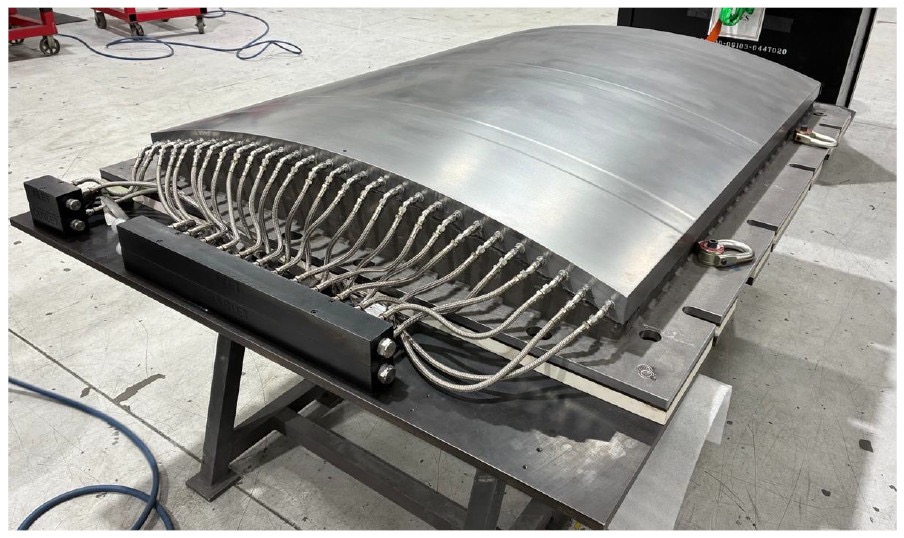
“Boeing wanted to explore the possibility of using wire-arc additive manufacturing,” said William Carter, an ORNL robotics engineer at the Manufacturing Demonstration Facility. “They worked with us to evaluate the issues in making the mold.”
Boeing will use the tool on NASA’s Hi-Rate Composite Aircraft Manufacturing project.
“NASA and its industry partners are working to increase the production rate of composite aircraft to meet the growing demand for air travel and to reduce aircraft weight, which improves fuel efficiency, lowering costs for aircraft operators,” said Richard Young, NASA’s HiCAM project manager.
ORNL treated the job as a test case. The lab says the same approach could be reused on similar tools, and on large thermoplastic structures for energy and automotive work.
Source: eurekalert.org