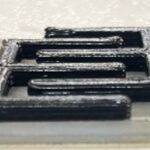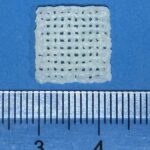

University of Southern California researchers have 3D printed flexible MRI coils in under 10 minutes for about $30, and tests showed roughly four times the image contrast of standard commercial coils.
MRI coils act like antennas. They need to sit close to the body to pick up a clean signal. Stock coils are sized for adults, so they leave gaps on infants and children. Custom pediatric coils exist, but they can cost thousands of dollars and take months or years to make, a problem when patients outgrow them quickly.
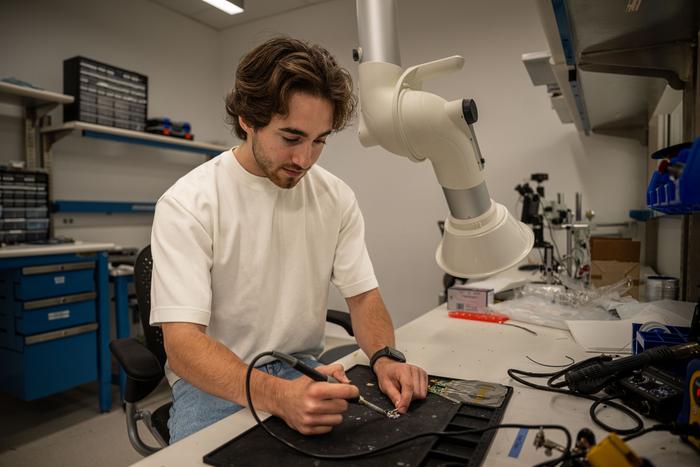
“By making customized MRI equipment faster and more affordable to produce, we have the potential to bring better imaging to patients who have traditionally had fewer options, especially infants and children,” said Yasser Khan, assistant professor of electrical and computer engineering and biomedical engineering at USC Viterbi, whose lab at the Michelson Center for Convergent Bioscience prints the coils.
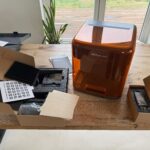
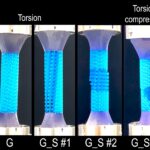
After about three years of work, the team prints conductive silver ink onto a thermoplastic elastomer that stretches about 5 to 10 percent, similar to skin, so the coil can follow the body instead of sitting off it. Designs are digital, so a coil can be resized as a child grows and printed again in minutes.
“If you use a large lens to image something very small, you’re not going to get the clearest picture,” Khan said. “But if you can tailor the lens, in this case the MRI coil, to the individual patient, you can capture a much better image.”
The coils were paired with 0.55 tesla dynamic MRI at USC’s Dynamic Imaging Science Center, led by Krishna Nayak, and tested with John Wood, director of cardiovascular MRI at Children’s Hospital Los Angeles. The work was published in Nature Communications.
Source: eurekalert.org