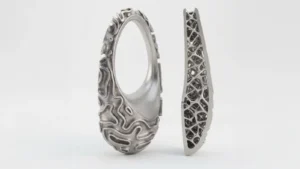

Tunisian-Italian designer Emna Hussein’s 3D printed handbags have made her a Fashion Tech Award finalist at Fashion Trust Arabia 2026. She faces Egypt’s Mesh-Mesh and Lebanon’s Girle for the prize, which backs emerging designers across the Middle East and North Africa.
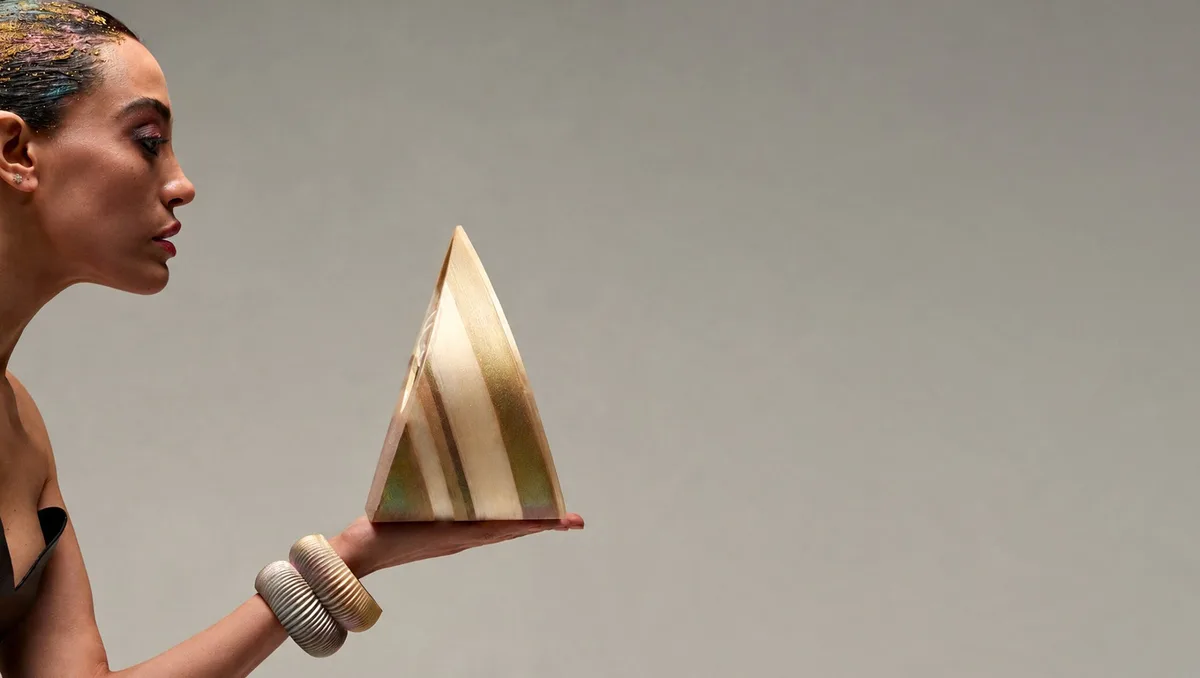
Hussein built her label in Cairo, launched it in December 2025 and has since moved to Houston. Before that she worked in digital communications in Paris for Chanel, Thierry Mugler and other luxury houses. She then ran an image consulting business and a clothing brand in Tunis, which she paused to learn 3D printing. “Cairo is the place where EMNA HUSSEIN really became a brand rather than a series of experiments,” she told CairoScene.
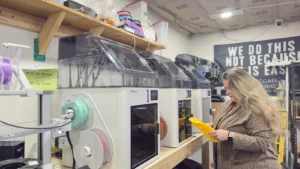
The turning point came with Elegoo With Her, a program for women that the Chinese printer maker launched at Formnext 2024. Each participant got a printer, courses and mentoring. Hussein used hers to build Jasm-e, a capsule which drew on the jasmine, fermla bridal waistcoats and chnechin bracelets of her Tunisian childhood.
Printing solved a practical problem, because curves, hollow volumes and modular pieces had called for molds, tooling or minimum runs that made little sense for a small independent label. Working from a file, she can shift a form by a few millimeters, print it, test it and change it again without starting over.
From Rebel Bride to Amanakal
Her first collection, Act I, The Rebel Bride, won the Technical Award in Fashion and Accessories at the 2025 Cairo Design Award. Its Halo and Petal bags scaled up the florals and gold of traditional weddings.
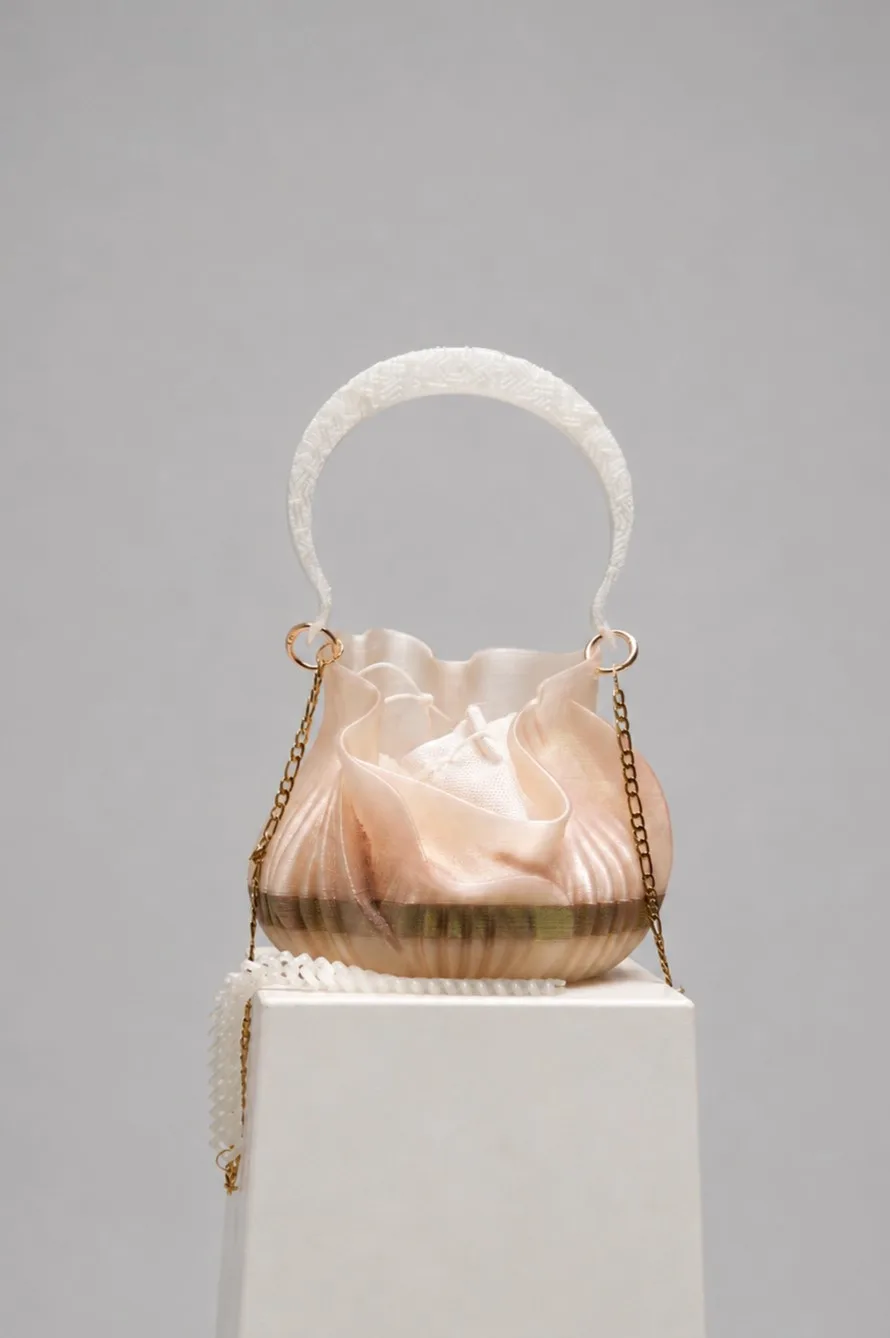
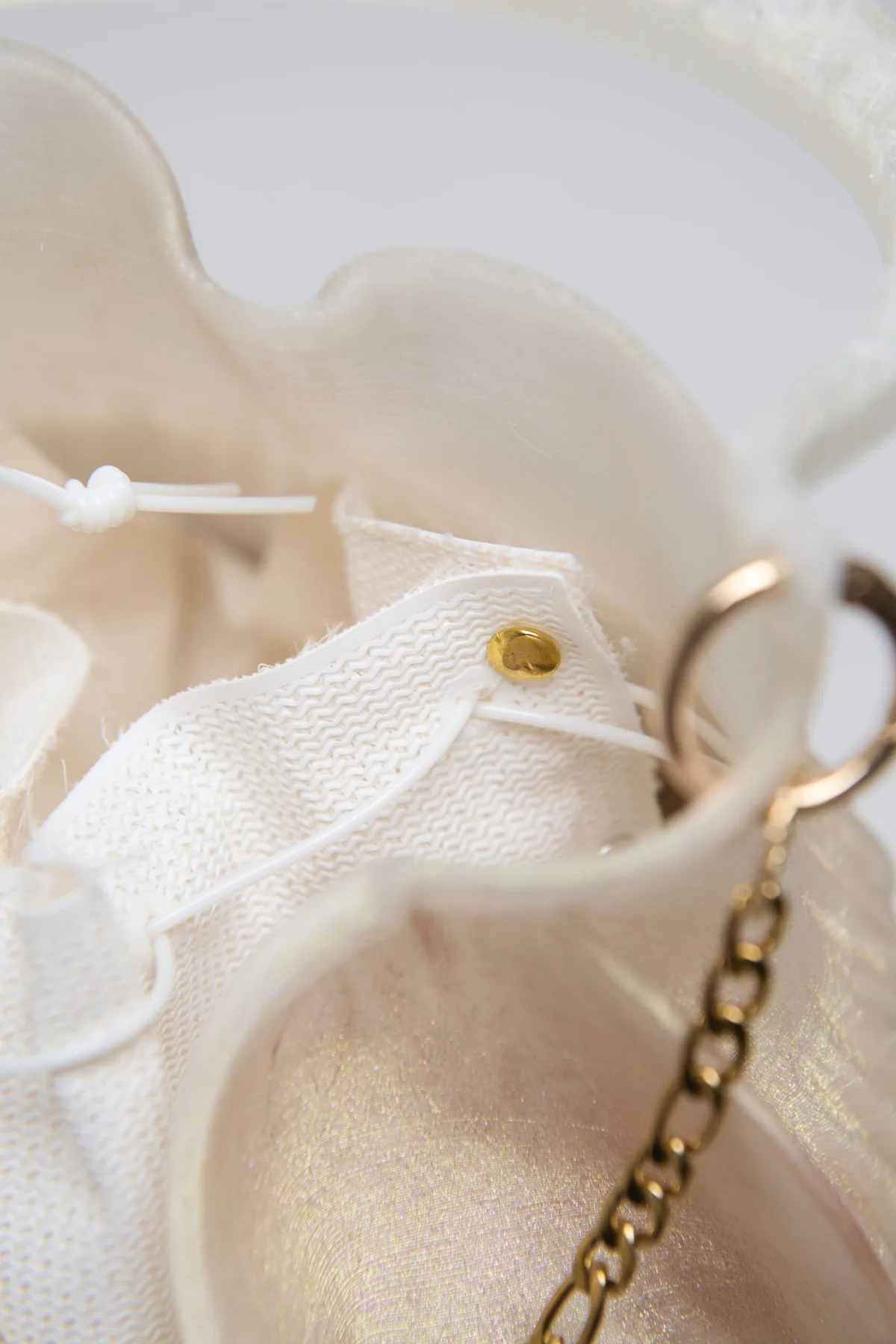
Act II, Amanakal, followed in Tunis in July 2026. Its name joins the Amazigh words aman, water, and akal, earth, and the materials follow that split. Translucent corn-based PLA forms the rigid bodies, while PLA composites filled with pine wood waste or crushed oyster shells add warm wood tones or a mineral finish. Inside some bags, biodegradable flexible filament is printed straight onto handwoven Tunisian hayek, the fabric North African women have long worn as a draped wrap.
The shell of the Murice Crest bag takes its cue from the murex, a spiny sea snail which the Phoenicians of Carthage crushed for purple dye. Each one needs about 43 hours of continuous printing plus 12 hours of hand finishing. She explained the name. “Murice is the Italian word for murex, and it is highly personal for me as it ties together my Tunisian and Italian heritage in one Mediterranean reference,” she said.
Printed, Then Finished by Hand
Every piece is sanded, painted with pigments and assembled by hand, and bags are made only to order. Hussein buys filament from specialist manufacturers and tests each new one, because a material can behave differently over a long print than in a sample.
She is careful not to oversell the green angle, though. Printers use electricity, failed prototypes create waste and plant-based plastics do not always break down in ordinary conditions. For her, the gains lie in flexibility, freedom from molds and making to demand.
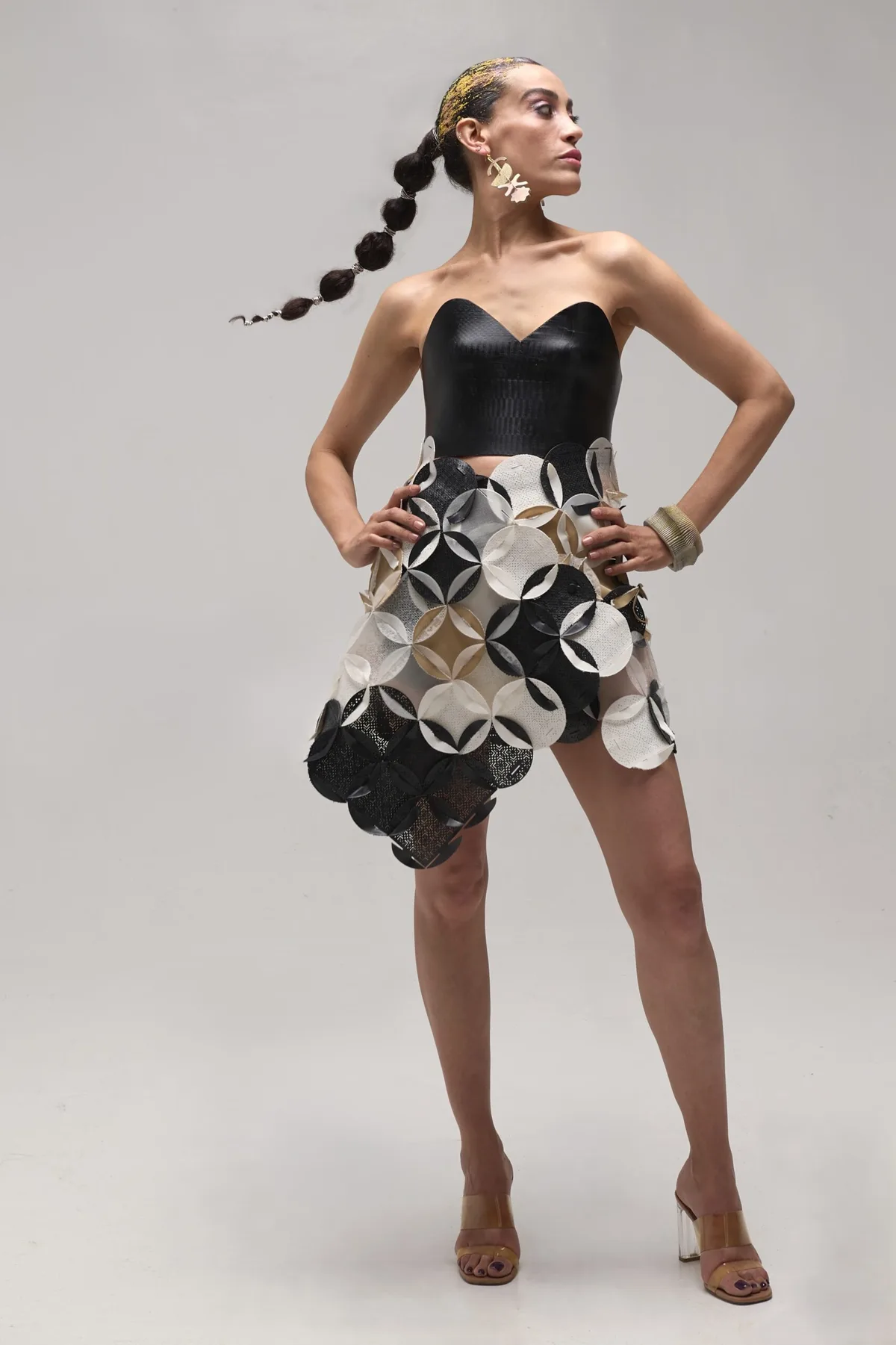
Future Acts will explore new compositions, recovered materials and hybrid textiles across North Africa, Europe and the United States. The nearer test comes on November 28 in Doha, when Fashion Trust Arabia names its winners.
Source: CairoScene, Emna Hussein