
The DEVCOM Army Research Laboratory (ARL) is working with Houston filament maker ZYLtech Engineering to mass-produce its patented dual-polymer filament, which doubles interlayer strength in standard printers. Drone bodies printed with it have already been through field trials with the 25th Infantry Division.
Weak bonds between layers are what keep fused filament fabrication (FFF) parts out of long-term field use, because they leave the parts too brittle. That matters to an Army that wants soldiers in remote or hostile areas to print parts on demand when supply chains break down.
ARL’s answer puts two polymers with different melting points into one strand, so one holds the geometry while the other flows and bonds. The version the lab showed in 2020 paired ABS with a star-shaped polycarbonate core, which Eric Wetzel, an ARL mechanical engineer and one of the inventors, compared to a skeleton. ARL’s latest patent on the concept, US 12,680,199, granted on July 14, covers a core with a central node and extending arms.
Annealing pushes the result further. “If you heat that 3D-printed part in an oven within a specific temperature range, you get even higher strength without changing the dimensions and 3D geometry of the part,” Wetzel said.
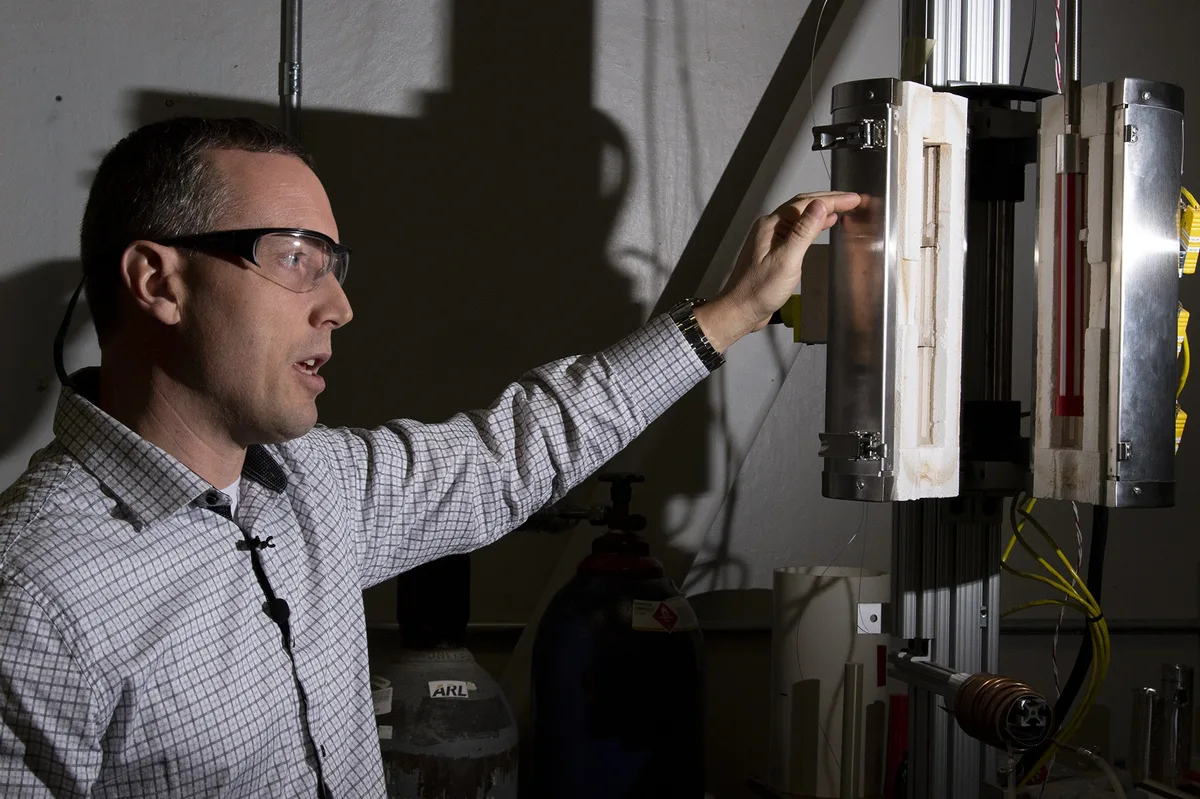
The first application tests ran with the DEVCOM Ground Vehicle Systems Center (GVSC), where the filament fed easily through the standard printers soldiers use in the field. Matthew Ludkey, mechanical engineer and lab manager at GVSC, put the gain in practical terms. “We were able to test and approve 3D-printed replacement parts using expeditionary printing capabilities that were previously only printable using industrial-style 3D printers,” he said.
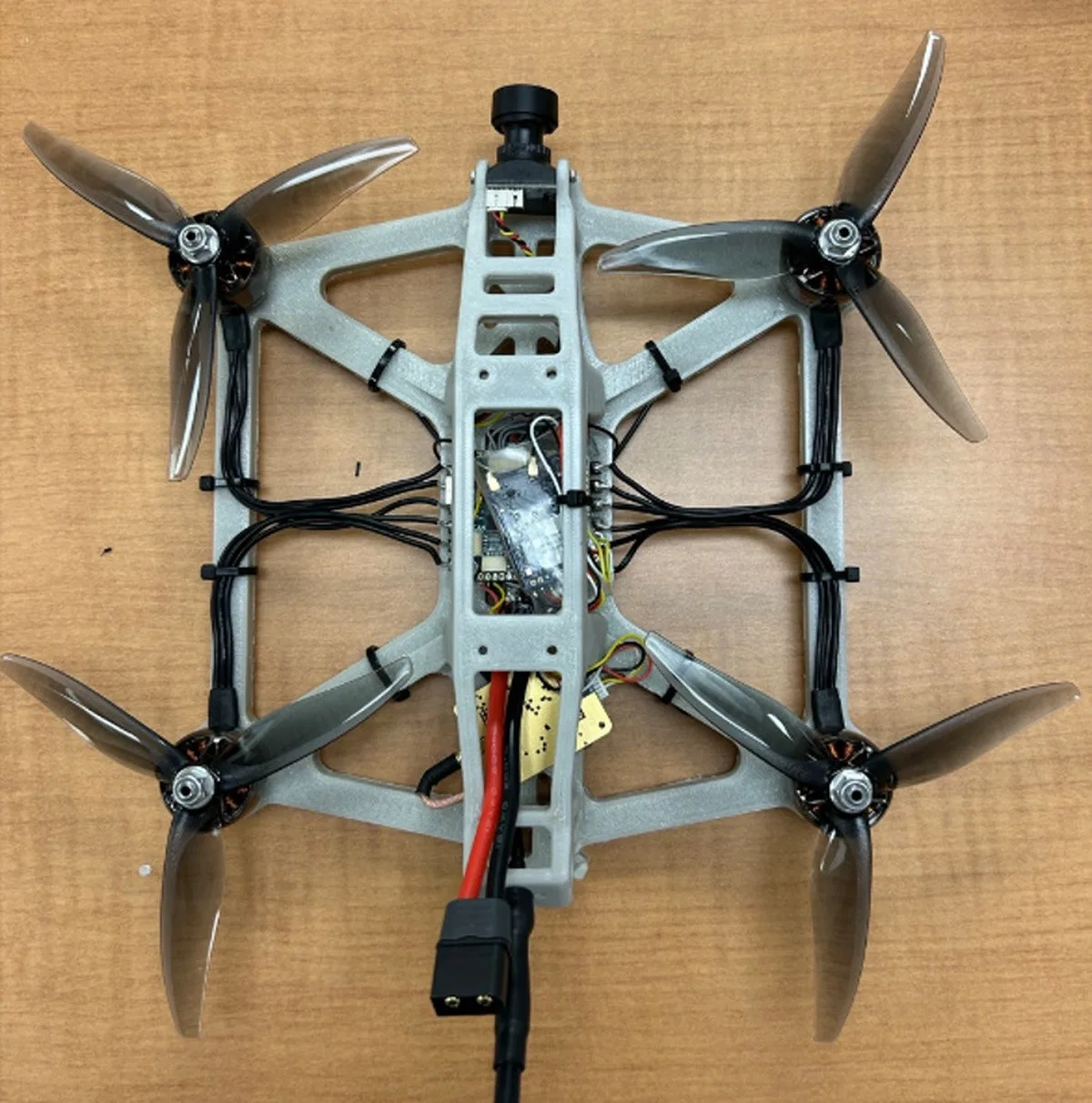
ARL then sent several printed quadcopter bodies to the division in Hawaii, where soldiers fitted motors and flew them through a series of durability trials. They outperformed bodies printed with conventional filament, and even stomping on them did not break them.
Making the filament affordably at volume took several more years of research. Back in 2020 the lab drew it from a preform without a die. The process it settled on instead needs a specialized extrusion line in which multiple extruders feed a single die. Wetzel described ZYLtech as one of the only domestic vendors with that setup.
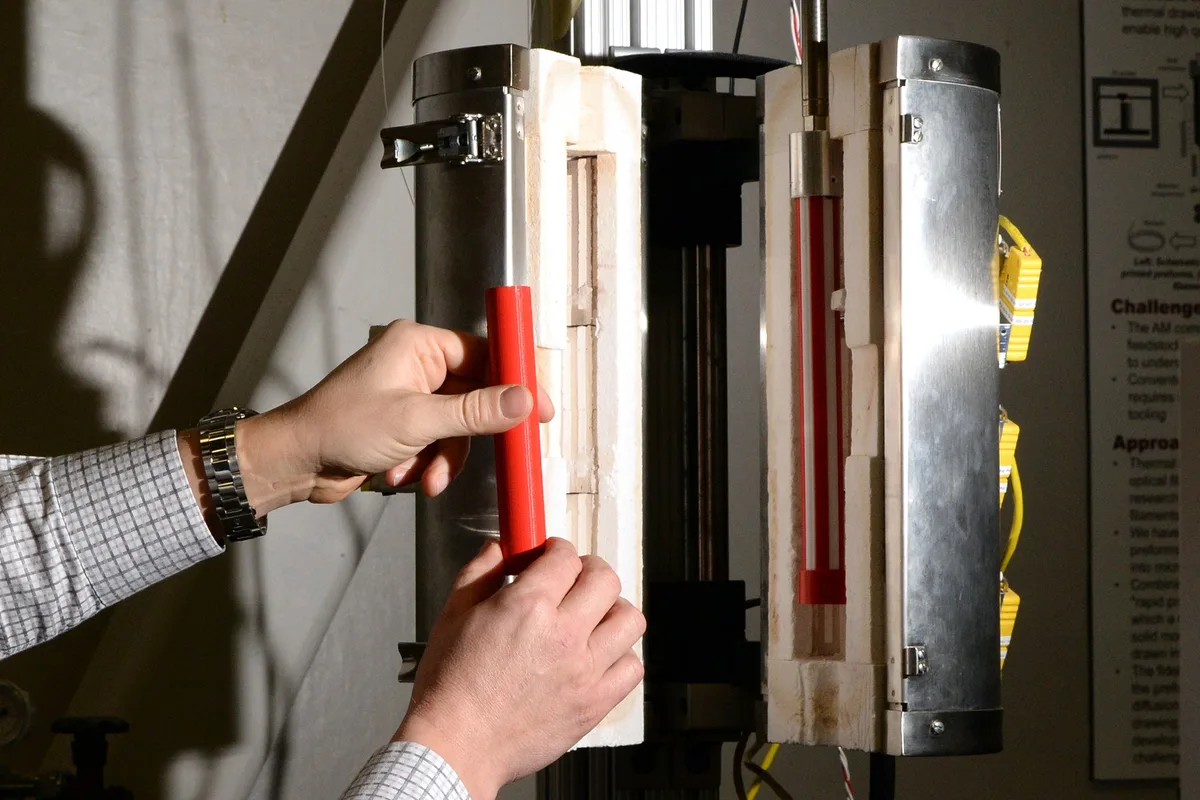
Under a Cooperative Research and Development Agreement (CRADA) that started in 2025, ARL chose the materials, laid out the filament cross-section and designed the die. ZYLtech brought the extrusion line and the know-how to push toward commercial production rates. Parts printed from several pilot runs have since gone to Army units for evaluation.
The Army has also moved to license the technology. An October 13 Federal Register notice announced its intent to license ZYLtech for dual- and multi-material filaments in ABS and ASA, polycarbonate, nylon and thermoplastic elastomers. The next step is quality, as the lab keeps working to improve the filament at the highest production rates.
Source: U.S. Army