
Why hardware teams are pairing additive manufacturing with CNC machining and molding, and what a single point of contact changes about the road from prototype to production.
Industrial 3D printing has earned its place in hardware development. A design that once took weeks to prototype can now be printed overnight, checked for fit in the morning and revised the same day. The trouble tends to start later, when a product moves toward launch and the team discovers that the process which produced a convincing prototype is not always the process that produces a sellable product.
End-use parts simply ask more of a manufacturing method. High-stress mechanical assemblies, sealed enclosures and high-frequency electronics need tolerances measured in microns, materials such as aluminum or PEEK, and surface finishes that hold up under close inspection. So more engineering teams now spec the part first and pick the process second, which in practice means multi-process, on-demand manufacturing.
Where standalone 3D printing hits its limits
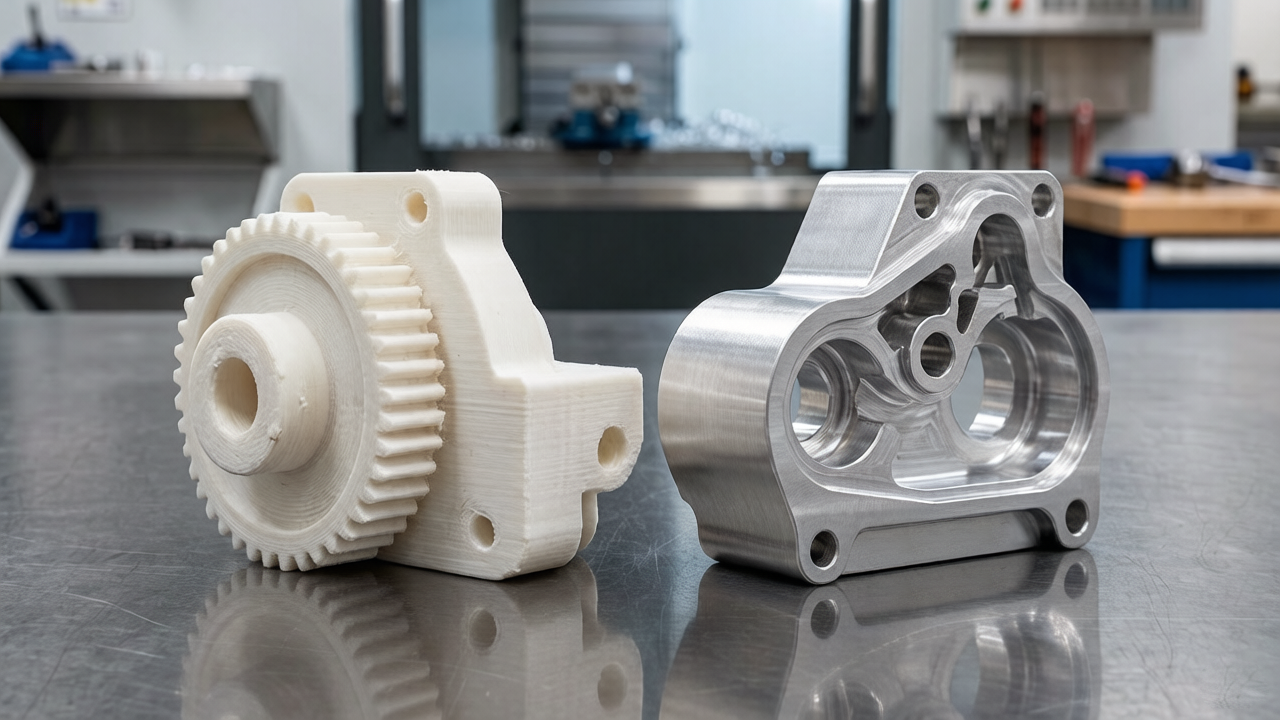
None of this is a knock on additive. The technology keeps improving, and for organic geometries, internal channels and early fit checks it has no real substitute. But the same constraints show up again and again once parts leave the lab:
- Tolerances and fits. Even the best powder-bed systems, polymer SLS or metal DMLM, leave a gap between what a drawing calls out for a bearing seat or a hermetic seal and what comes off the build plate. Critical features can carry callouts as tight as ±0.005 mm, which is machining territory. A press fit that works on prototype number three should still work on part number three thousand.
- Material anisotropy. Parts built layer by layer are weakest where the layers meet, and loads across the build direction find the seams. For components under real structural load, machining from solid stock offers uniform strength that printed parts don’t match.
- Everything after the build plate. Threaded inserts, smooth sliding joints and cosmetic treatments such as anodizing or powder coating usually come from secondary machining operations, not the printer.
CNC and additive work better as a pair
The teams getting the most out of both technologies have stopped treating them as rivals. In a typical development cycle, a housing gets printed first to prove the internal layout. Once the design is frozen, the structural brackets are milled from solid aluminum for maximum durability, while the outer enclosure moves to rapid injection molding for repeatability and unit cost.
Each part lands on the process that suits it. Additive still earns its keep, sometimes as a production part with internal geometry nothing else can make, more often as the prototype that got the design frozen in the first place.
One platform instead of three vendors
The catch with hybrid production has always been logistics. Historically it meant a fragmented supply chain: one vendor for 3D printing, another for CNC machining, a third for finishing, each with its own quoting process, lead times and calibration standards. Getting parts from three sources to assemble cleanly is a project in itself.
Digital manufacturing platforms such as LS Manufacturing compress that chain into one vendor relationship, offering CNC machining, sheet metal fabrication, injection molding and rapid prototyping under one roof.
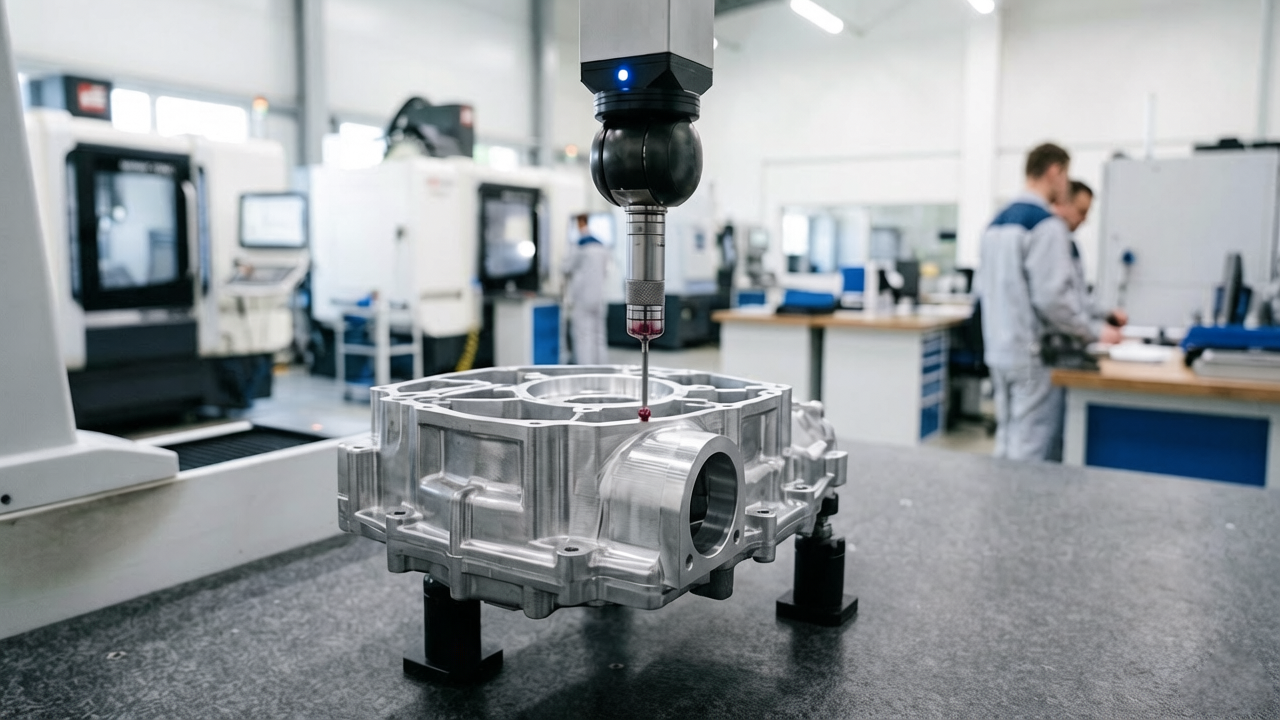
The practical gains are easy to underrate. Design for Manufacturability reviews, automated and engineer-led, flag problems at the CAD stage, before a single chip is cut. That matters because CAD is where most of a part’s cost gets locked in. Every part comes off machines calibrated to the same standards, so assemblies stop refusing to mate at the last minute. And scaling stops being a cliff. The same platform that turns around one prototype in as little as 24 hours can carry a program through a 10,000-unit production run.
The right process for the right part
Most hardware projects stall in the unglamorous middle, somewhere between a working prototype and a repeatable production run. Getting through that stretch comes down to matching each part with the process it actually needs at each stage, and having a supply chain that can execute all of them without a handoff penalty.
An integrated platform does not make those engineering decisions for you. It just takes the vendor juggling off the table, which frees the team to spend its attention on the product.
This article is sponsored by LS Manufacturing.