
NIOA will install Australia’s first industrial-scale ceramic 3D printing production capability at its Maryborough munitions plant, backed by A$15 million from the Queensland government.
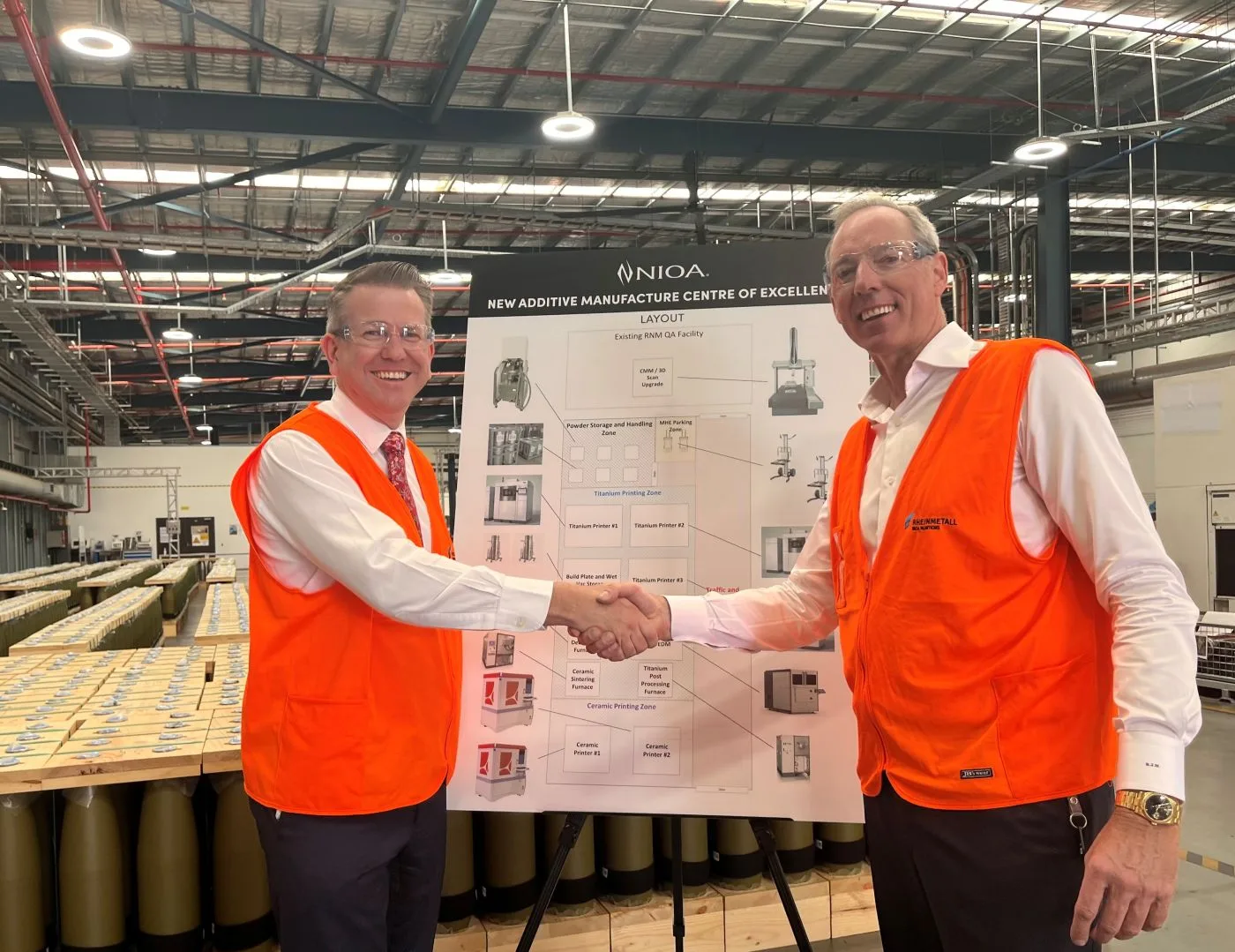
The grant comes from the state’s A$180.6 million Sovereign Industry Development Fund, and Deputy Premier Jarrod Bleijie’s award on November 25 takes the fund’s defence total past A$90 million. It goes toward a A$29.85 million project that also adds new industrial-scale metal additive manufacturing equipment. The aim is stronger sovereign defence supply chains in regional Queensland.
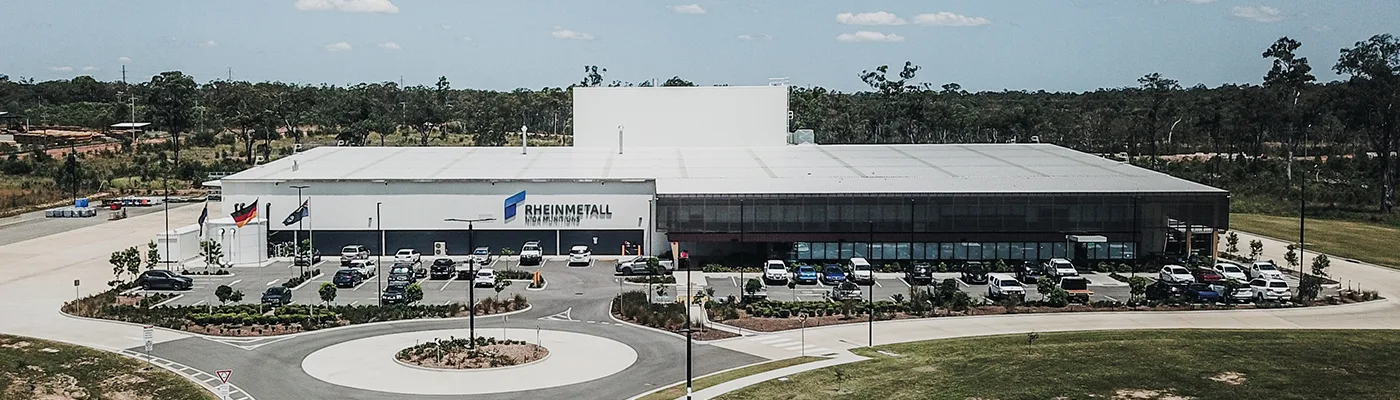
The plant already makes parts the traditional way. Rheinmetall NIOA Munitions (RNM), a joint venture between Australian-owned NIOA and Germany’s Rheinmetall Waffe Munition GmbH, opened it in 2022. Today it forges and precision machines 155mm artillery projectile bodies for international supply chains. The printers will sit alongside that forging and machining line, so the facility can move beyond shells into missile, drone and counter-drone components.
Five Printers and Their Own Feedstock
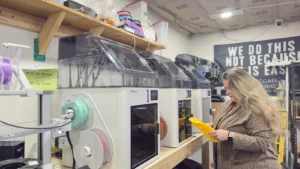
NIOA plans to handle the whole chain in house, from feedstock design and production through printing to post-print processing. The proposed equipment list is short but serious, with three ceramic and two metal industrial 3D printers, two post-print sintering ovens and a prototype sintering oven. That setup targets parts with complex shapes and tough demands on weight, strength and temperature resistance, including advanced ceramic components for high-speed defence systems.
The state statement lists munitions, missiles, rocket motors, drones and counter-drone systems for domestic and export markets, and aerospace components are on NIOA’s list as well. Government and company both want Maryborough to become an Australian centre of excellence for advanced additive manufacturing.
Rob Nioa, managing director and CEO of NIOA, framed the grant as a way to bring new technology into the country. “The Queensland Government’s support will bring the latest technology to Australia, including industrial-scale metal and ceramic 3D printing, and put it to work building sovereign capability,” he said. Because the work runs through a state partnership, he sees NIOA “creating a manufacturing hub capable of producing next-generation components for Australian and international customers.”
The local angle matters too, since the project sits well outside the state’s south-east corner. John Barounis, the Member for Maryborough, called it a major win for the town. “This investment will put Maryborough on the map as a centre of excellence for advanced additive manufacturing, bringing world-class ceramic and metal 3D printing capabilities to regional Queensland,” he said.
Running by Late 2028
The new capability is expected to be fully operational by late 2028. By then the project should create and sustain up to 18 high-skilled jobs in Maryborough, next to the existing RNM forge.
Source: Queensland Government and NIOA