ORNL and Boeing 3D-Print a Nearly Two-Ton Mold for Aircraft Parts
Oak Ridge National Laboratory and Boeing 3D-printed a nearly two-ton steel mold for stamping thermoplastic composite aircraft parts.

3D printing metal technologies like powder bed fusion, metal binder jetting, and directed energy deposition have grown at an explosive pace. Read everything about it here on 3DPrinting.com.
Oak Ridge National Laboratory and Boeing 3D-printed a nearly two-ton steel mold for stamping thermoplastic composite aircraft parts.
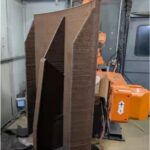
RMIT engineers have created a 3D-printed titanium material that floats in water even after severe damage, a candidate for jetties, buoys and marine... read more »
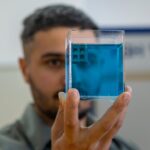
Washington State University researchers used AI to find process settings that 3D print GRCop-42, a NASA copper-chromium-niobium alloy used in rocket engine combustion... read more »
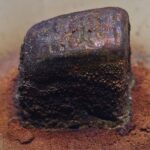
Scientists at The University of Manchester have found that small temperature changes during molten metal deposition can substantially alter the quality of 3D-printed... read more »
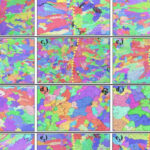
Phase3D has closed an oversubscribed $2.9 million funding round to accelerate the adoption of its Fringe Inspection technology for metal additive manufacturing. Quest... read more »

TDK Corporation has agreed to acquire San Diego-based Fabric8Labs for up to $400 million in cash, the Japanese electronics giant announced June 10.... read more »
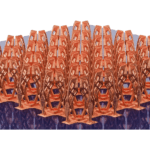
Scientists at Oak Ridge National Laboratory have found a way to use 3D printing to build the canisters needed for powder metallurgical hot... read more »

Fleet Readiness Center East has delivered its first flight-certified metal 3D-printed parts to the U.S. Navy fleet, completing the qualification, production, and certification... read more »
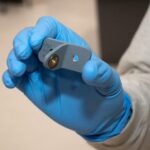
Scrap Labs debuted its Scrap 1 laser powder bed fusion metal 3D printer at the Rocky Mountain RepRap Festival in Loveland, Colorado on... read more »
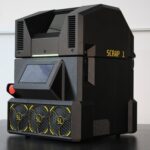
The University of Oklahoma has been awarded $8.8 million to launch Phase II of a metal 3D printing research program aimed at cutting... read more »

QinetiQ, working with Additive Manufacturing Solutions Limited (AMS Ltd.), has conducted what it says is the first flight of a helicopter containing a... read more »
Researchers at the University of Nottingham have developed 3D printed surfaces with specialized textures that can redirect unwanted gas particles away from quantum... read more »
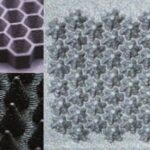
Innospace, a South Korean company based in Sejong, has successfully demonstrated a method for 3D printing spherical vessels without requiring support structures. The... read more »
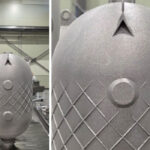
Auburn University's National Center for Additive Manufacturing Excellence (NCAME) has formed two new partnerships to advance 3D printing research for aerospace and maritime... read more »

Researchers at Nagoya University have created new aluminum alloys designed for high-temperature applications using metal 3D printing technology. The alloys incorporate iron, an... read more »

Russian nuclear corporation Rosatom has received regulatory approval for the first 3D-printed component of an RITM-200 small modular reactor plant. The component, a... read more »
The University of Cádiz (UCA) has started a two-year research project focused on repairing metal components for Andalusian industry using advanced manufacturing technologies.... read more »

Colibrium Additive has announced the commercial availability of its M Line 4 x 1 kW laser powder bed fusion system designed for non-reactive... read more »
Southern Illinois University Carbondale assistant professor Sangjin Jung has received a $200,000 National Science Foundation Engineering Research Initiation grant to tackle reliability issues... read more »

Vulcan has announced the launch of its MX Series laser powder bed fusion (LPBF) metal 3D printers. The company positions the entry-level MX100... read more »